
<< ACTUALITEITEN
13 September: a will can also pass on what matters to you
September 2026
What do we wish to leave behind?
Each of us answers that question differently: memories, values, care for our loved ones, convictions that have guided a life…
13 September, the International Legacy Giving Day, is an opportunity to recall that a will is not only used to organise the transmission of one’s estate. It can also make it possible to extend a commitment and support, in the future, a cause that matters today.
Between intention and action
Including a good cause in one’s will remains a deeply personal step. Yet the idea appeals to far more people than one might imagine.
According to a study conducted by HOGENT on the behaviour of Belgians who support charitable causes, nearly one third of them wish or are considering including a charitable organisation in their will.
But between intention and action, the gap remains significant: only 4 % have already formalised this decision in a will, while 5 % say they intend to do so.
These figures show that solidarity beyond one’s lifetime is no longer a marginal idea. They also show that, for many, it remains at the stage of reflection.
International Legacy Giving Day is precisely an opportunity to seek information, ask questions, and think about what one wishes to pass on without any commitment.
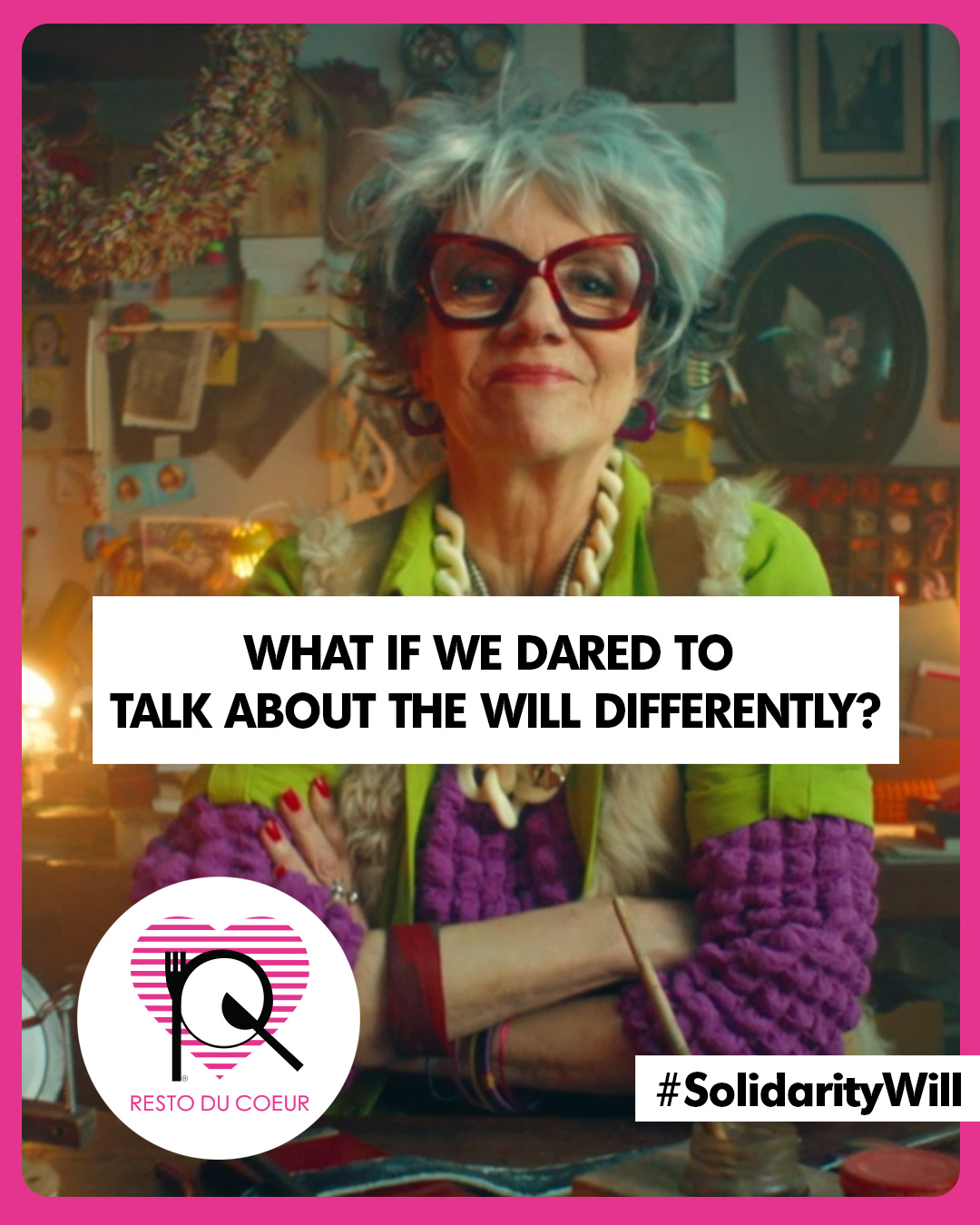
For the Restos du Cœur, legacies and inheritances represent far more than a one‑off financial contribution. They help anchor our work overtime and ensure the continuity of our missions for people facing hardship.
Passing on does not necessarily mean giving everything
Speaking about a will in favour of a good cause can sometimes give the impression that one must choose between one’s loved ones and an organisation. This is not the case.
The Royal Federation of the Belgian Notarial Profession (Fednot) reminds us that Belgian inheritance law protects heirs who cannot be disinherited. When they exist, part of the estate is legally destined for them. A will makes it possible for someone to decide how to allocate the portion that can be freely disposed of, while respecting these rights.
A legacy can also take different forms: it may concern a sum of money, a specific asset, or a portion of the estate. It is therefore not necessary to bequeath all one’s property to support a cause.
A will is not an irreversible decision either. As long as the person is alive and capable of deciding, their wishes may be adapted or modified if their personal situation or choices evolve.
Keeping solidarity alive beyond oneself
At the Restos du Cœur, this solidarity supports work that goes far beyond food aid.
In the 21 Restos du Cœur of Belgium, support is structured around four pillars: food aid, educational assistance, housing assistance, and healthcare assistance.
Including the Resto du Cœur of Belgium Federation in one’s will means choosing to contribute to the continuity of these actions and enabling the teams to continue supporting people experiencing hardship.
It is also a way of preserving a simple conviction: solidarity does not end with what we are able to accomplish today.
Informing oneself before deciding
Drafting a will deserves careful thought. As every family and financial situation is different, Fednot recommends consulting a notary to ensure that the wishes expressed are legally correct and can be respected.
There are several types of will in Belgium -- holograph, notarial, or international -- each governed by precise rules. The notary can help determine the solution best suited to each situation.
The decision to include or not include a good cause in one’s will remains, of course, entirely personal.
For those who simply wish to obtain information, the Restos du Cœur of Belgium also provide the free guide “Bien régler, bien léguer” [Plan Well, Bequeath Well] which allows readers to explore these questions at their own pace and in complete freedom.
13 September may be an opportunity to reflect on it, to discuss it with loved ones, or simply to seek information.
Because what we pass on is not always limited to what we own. It can also tell the story of what mattered to us.